

You know the routine by now.
You stand at the bathroom mirror, concealer in hand, trying to cover patches that weren't there two years ago. You've worn SPF every single day. You've tried the vitamin C serums, the retinols, maybe even a laser treatment that cost $400 and made things worse. And still — every month, the melasma spreads a little further, darkens a little more, and your old face feels a little further away.
You've done everything right. So why does nothing work?
The Answer Has Nothing to Do With Your Skincare Routine
Here's what the mainstream beauty industry doesn't want to address: if melasma were simply caused by sun damage, it would affect women evenly — regardless of age or hormonal status.
It doesn't.
Melasma explodes in perimenopause. It appears on women who have worn SPF religiously for decades. It shows up on skin that barely sees sunlight. And it keeps coming back no matter how diligently you treat it.
That's not sun damage behaving strangely. That's a hormone firing underneath your skin — and researchers have now identified exactly which one.
Meet MSH: The Melanin Hormone Nobody Warned You About
Your body produces a hormone called MSH — melanocyte-stimulating hormone. Its job is to regulate how much pigment your skin cells produce.
Under normal circumstances, MSH stays balanced. Your skin produces pigment at a healthy, controlled rate.
But when estrogen drops in perimenopause, MSH spikes. And when MSH spikes, your skin is flooded with signals to produce melanin — 3 to 5 times faster than normal. Those signals don't stop because you applied a brightening serum. They don't care about your SPF. They fire continuously, driving your pigment-producing cells into overdrive.
That's your melasma. Not sun damage creating it. A hormone commanding your skin to produce it.
Researchers confirmed this by comparing skin samples taken directly from melasma patches to normal surrounding skin. MSH levels were measurably elevated inside every single dark patch — and completely normal in the skin right beside it.
"Treating melasma without addressing MSH is like mopping the floor while the faucet is still running. You can chase the pigment on the surface for the rest of your life. Until you shut off the signal creating it, it will always come back."
So What Would Actually Stop It?
To stop melasma at the source, you'd need something that could reach the melanin signaling cells and block the MSH command before the pigment is ever produced.
2025 Research Finding
Researchers published findings showing that niacinamide — when formulated at a stabilized low pH — blocks the melanin hormone signal at the source. Not standard niacinamide. A specific low pH-stabilized version that maintains its potency long enough to actually reach MSH signaling cells. Standard formulas never could.

That finding changed everything. Because for the first time, the question wasn't "which ingredient fades pigment fastest" — it was "which formulation actually reaches the hormone signal before the pigment is ever created."

The answer, it turned out, had been hiding in plain sight. An ingredient most women had already tried — just never in the form that could actually work. That's the gap Paradsis Brightening Gel was built to close: the first brightening treatment formulated specifically around the 2025 MSH research, at the precise pH the study identified as necessary to reach melanin signaling cells. No other product on the market was engineered this way — because no other product was built for this problem.
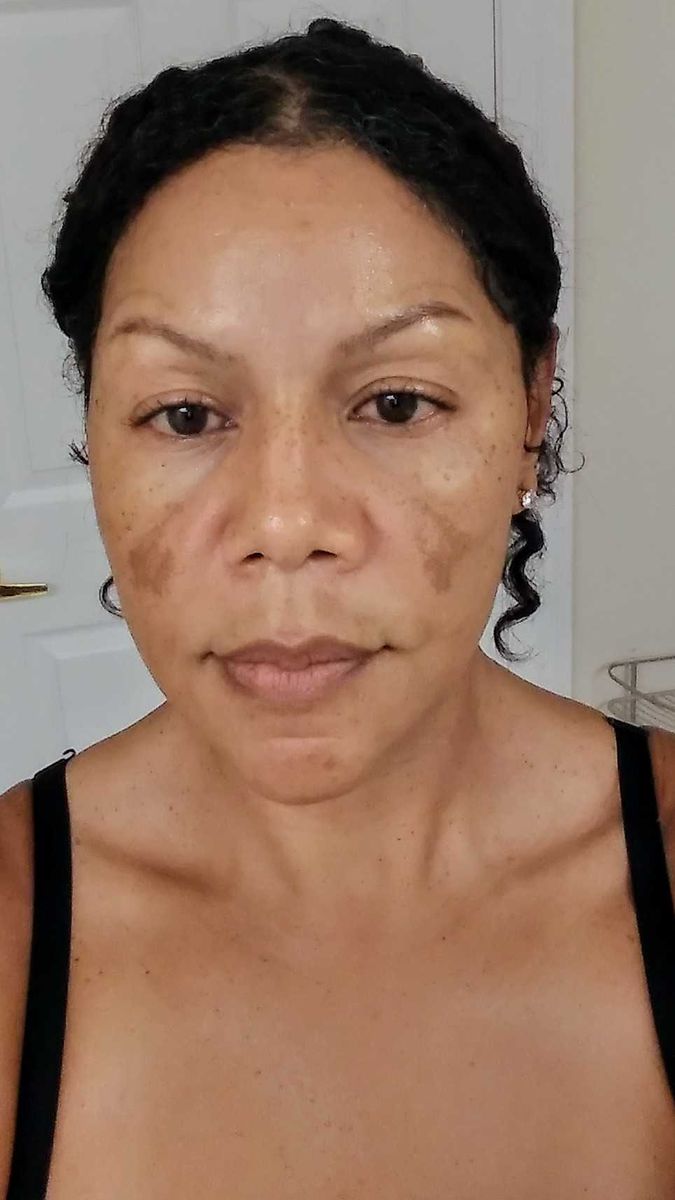 Before
 Week 4
"Talk about a game-changer! My skin is bright and full of life. I've suffered from these horrid brown areas over my eyebrows and cheeks for years let me tell you years! I am tickled pink with these results - I can once again see my face."
Ramandeep S.✓ Verified Purchase
 Before
 Week 5
"Let the pictures speak for themselves!"
Teresa M. ✓ Verified Purchase
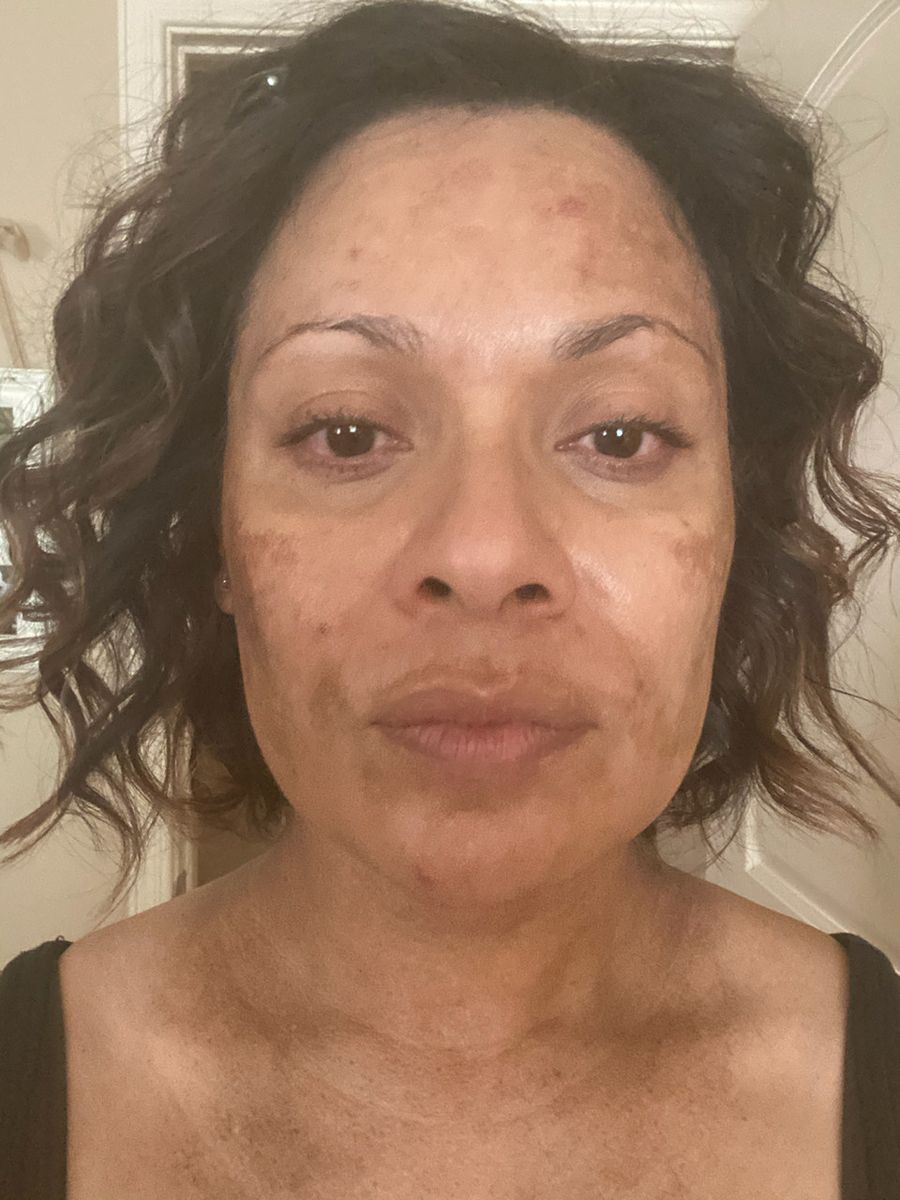 Before
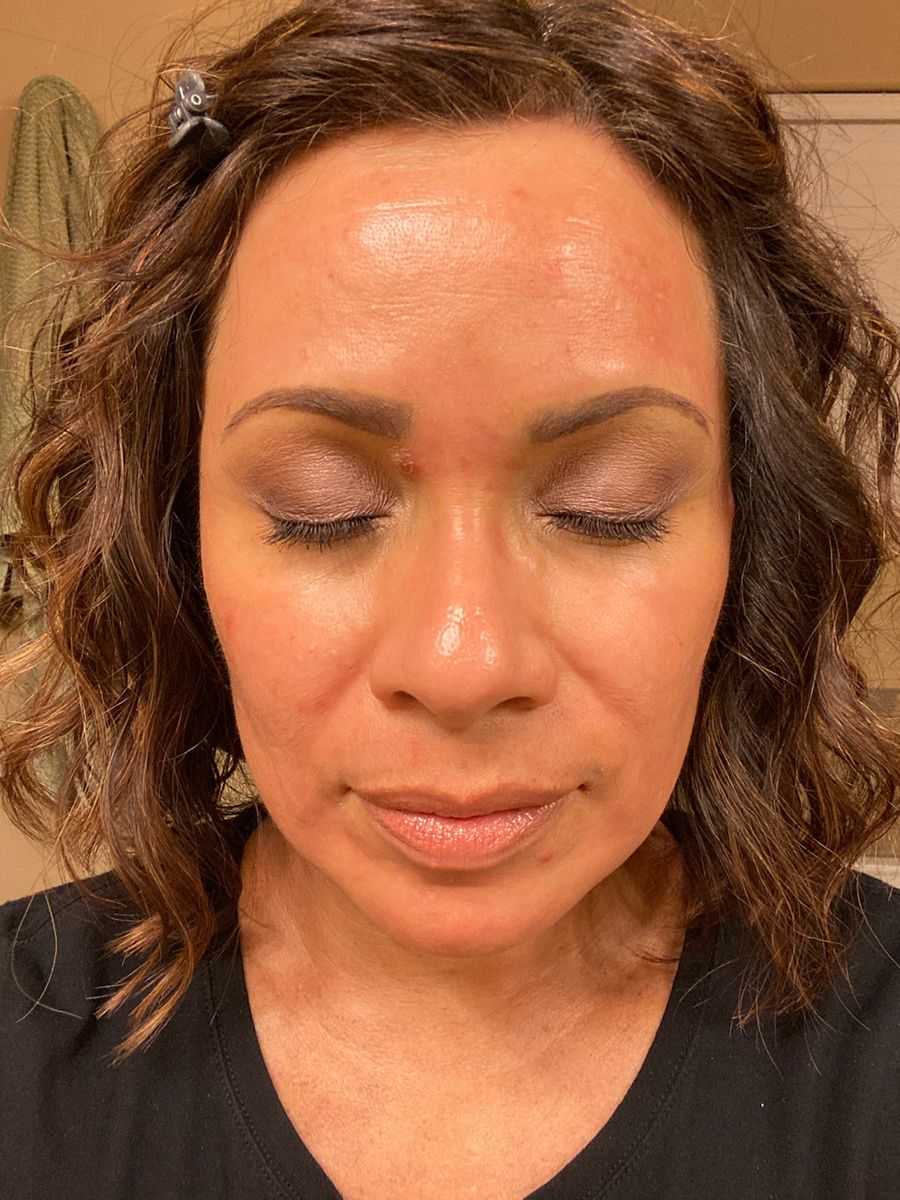 Week 5
"I have had melasma for the last 18 years and I have tried many things to lighten or clear it up but nothing really worked so I decided to just to cover it up with makeup, but my twin sister gifted ththis to me and in 32 days it’s made such a difference. I just feel so much better about my skin and I still wear makeup, but I don’t have to use heavy makeup and I get compliments on how glowy and smooth my skin looks. Thanks to my sister and Paradsis!!"
Jalia N. ✓ Verified Purchase
Paradsis combines five clinically proven ingredients working together:
- Low pH-Stabilized Niacinamide — blocks MSH signals at the source, the only formula engineered to reach melanin signaling cells
- Lactic Acid — gently sheds darkened layers without irritating hormone-sensitive menopausal skin
- Hyaluronic Acid, Ceramide NP & Collagen — repairs the skin barrier that declining estrogen has left compromised
Apply just at night to affected areas. That's the entire routine. Most women see visible fading within two to four weeks.

If You've Tried Everything, Read This
If your first instinct is skepticism, that's the right instinct. You've earned it.
Think about what you've already been through. The vitamin C serums you used faithfully for months — maybe you saw a little fading, then it came back. The retinols that promised cell turnover but left your skin red and irritated instead. Maybe you even sat in a dermatologist's chair for a $400 laser treatment, walked out hopeful, and watched the spots return darker than before within weeks.
None of those products failed because you used them wrong. They failed because they were solving the wrong problem. Every single one was designed to fight pigment that was already sitting on your skin — while your MSH hormone kept firing underneath, producing new pigment 3 to 5 times faster than any serum could fade it.
That's not a failure of your skincare routine. That's a structural mismatch between what those products do and what your skin actually needs after hormonal change.
Paradsis doesn't compete with those products. It operates one step earlier — at the hormone signal that tells your skin to produce pigment in the first place. Block the signal, and there's nothing left to fade.
The Window Is Now
Paradsis is produced in small batches — the pH stabilization process alone takes six weeks per batch to complete. Current stock is available at a 30% introductory discount for women ready to address the source.
⏳ The Cost of Waiting Is Measurable
Every day MSH goes unblocked, new melanin signals are being sent. Those spots aren't sitting still — they're migrating deeper into the skin layers where foundation can no longer reach them. The woman who starts blocking those signals today typically sees visible fading within four to six weeks. The woman who waits another six months will be starting from a significantly darker baseline — and may need twice as long to see the same result. The spots you have right now are the lightest they will be if you wait.
Most women who find this page have already spent $300, $500, sometimes over $1,000 on serums, treatments, and procedures that never addressed what was actually driving the problem. Paradsis costs a fraction of that — and it's the first thing that targets the cause instead of the symptom. With the 60-day guarantee, the only real cost is waiting.
Limited Batch — 30% Off
Stop the Signal.
Reclaim Your Skin.
Most women dealing with hormonal melasma have already spent hundreds — on serums that faded nothing, lasers that made it worse, prescriptions that came with trade-offs they weren't warned about. Paradsis is a fraction of that cost. And it's the only thing built around what's actually causing the problem. 30% off for the current batch — backed by a full 60-day guarantee.
✓ 60-Day Money-Back Guarantee · ✓ Limited Batch Availability